Demo Site
See what every tool available in Social Pinpoint looks like.

Now, let's dive into Social Pinpoint. We will cover, in order, how to do each of the following. The recording of this session will be uploaded below for your reference at any later date. You will also find links here to pages on the Knowledge Center (the Social Pinpoint self-help desk!) for further details on how to accomplish each of these learning objectives and dive in further as you have time and interest.
Provide a succinct overview of the project. The language in the page settings description will be the preview that loads when the URL is shared or searched.
NOTE: once you launch a page, if you had originally put filler text in for the description, you'll need to update both in the header block AND page settings, it won't automatically update both when you change one of them.
You can decide among your organization how you want to categorize projects across these three status options.
For customers with portal landing pages, you are certainly not beholden to this wording externally. Feel free to update the block headers on your portal landing page to reflect different wording for each status, such as "looking for feedback" and "in progress" instead of "open" and "active". Up to you!
Public:
Private:
NOTE: Be careful when changing page design layouts once you have built the page out--just be sure no content gets lost in the shuffle (it's just a matter of dragging things over if you'll be eliminating sidebars, etc.)
If your multi-project platform is using Locations to filter projects, you can tag the appropriate one for your project.
If your multi-project platform is utilizing categories (mobility, environmental, etc.) to filter projects, you can check as many as you think relate to the project.
Building out Teams within your site can help with a few things:
If you plan to use a Project Map, the project pages will need to be geolocated. You can use points, lines, or polygons to mark the location of a project page.
This is available but we want folks to receive training first (which you are doing right now!) so it needs to be "turned on". Contact your CSM or Helpdesk to do so.
Quick Poll: Poll your audience with a single, multiple-choice question that is easy to respond to, and shows immediate results.
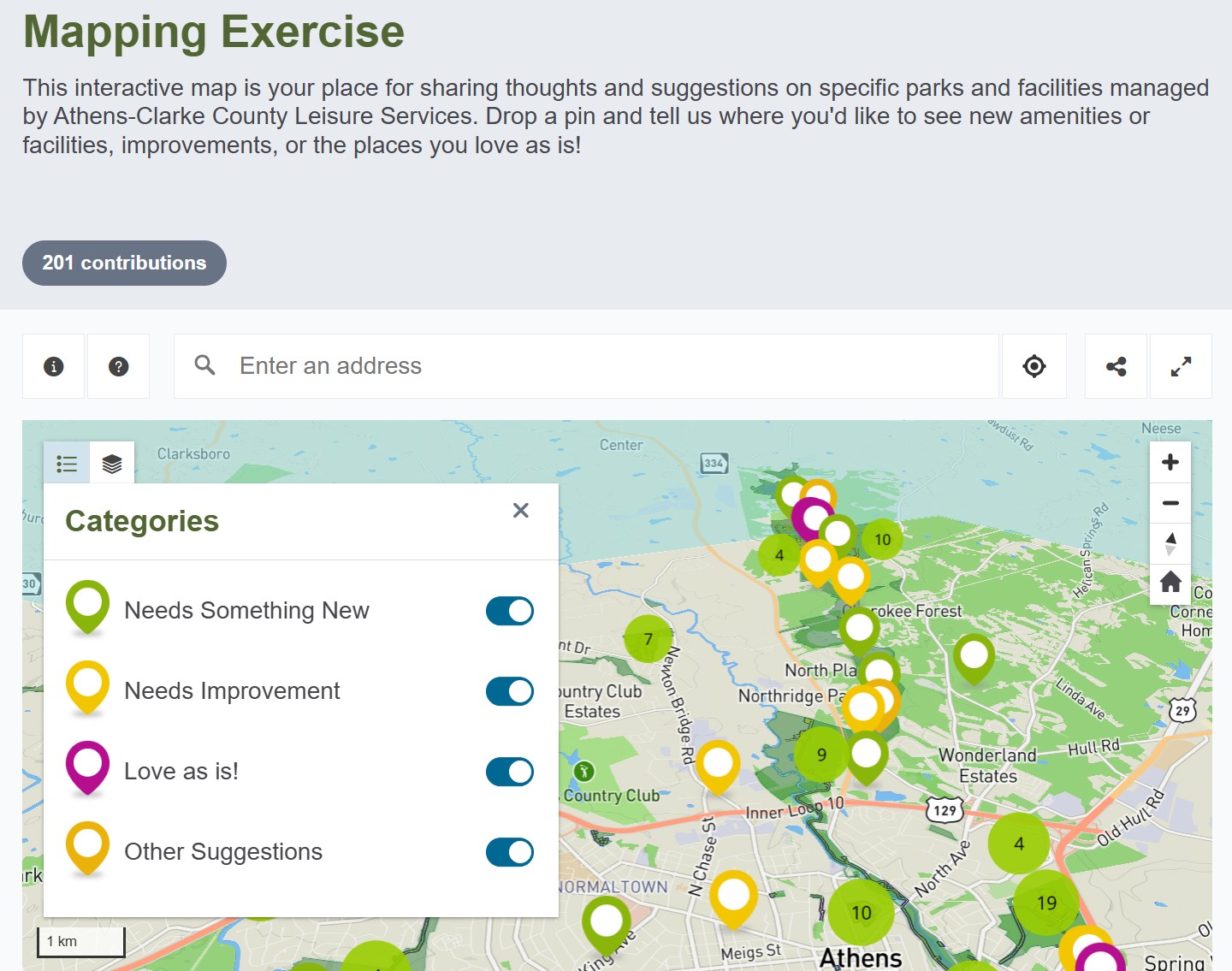
Social Map: Easily collect spatially-based qualitative and quantitative feedback via an interactive with optionally embedded survey.
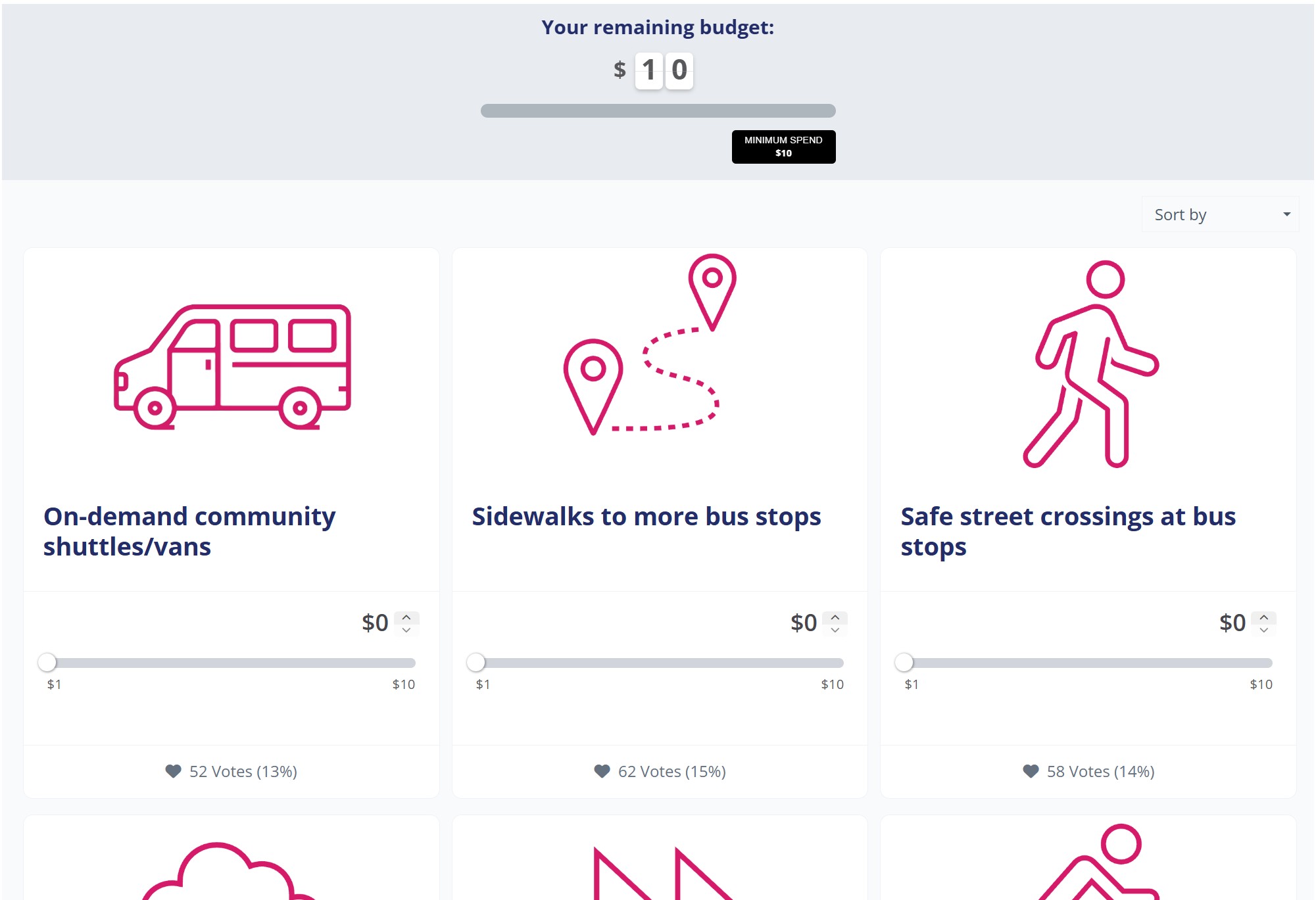
Fund It: Participatory budgeting for assessing tradeoffs that can be set up with dollars or points. Shows aggregate results.
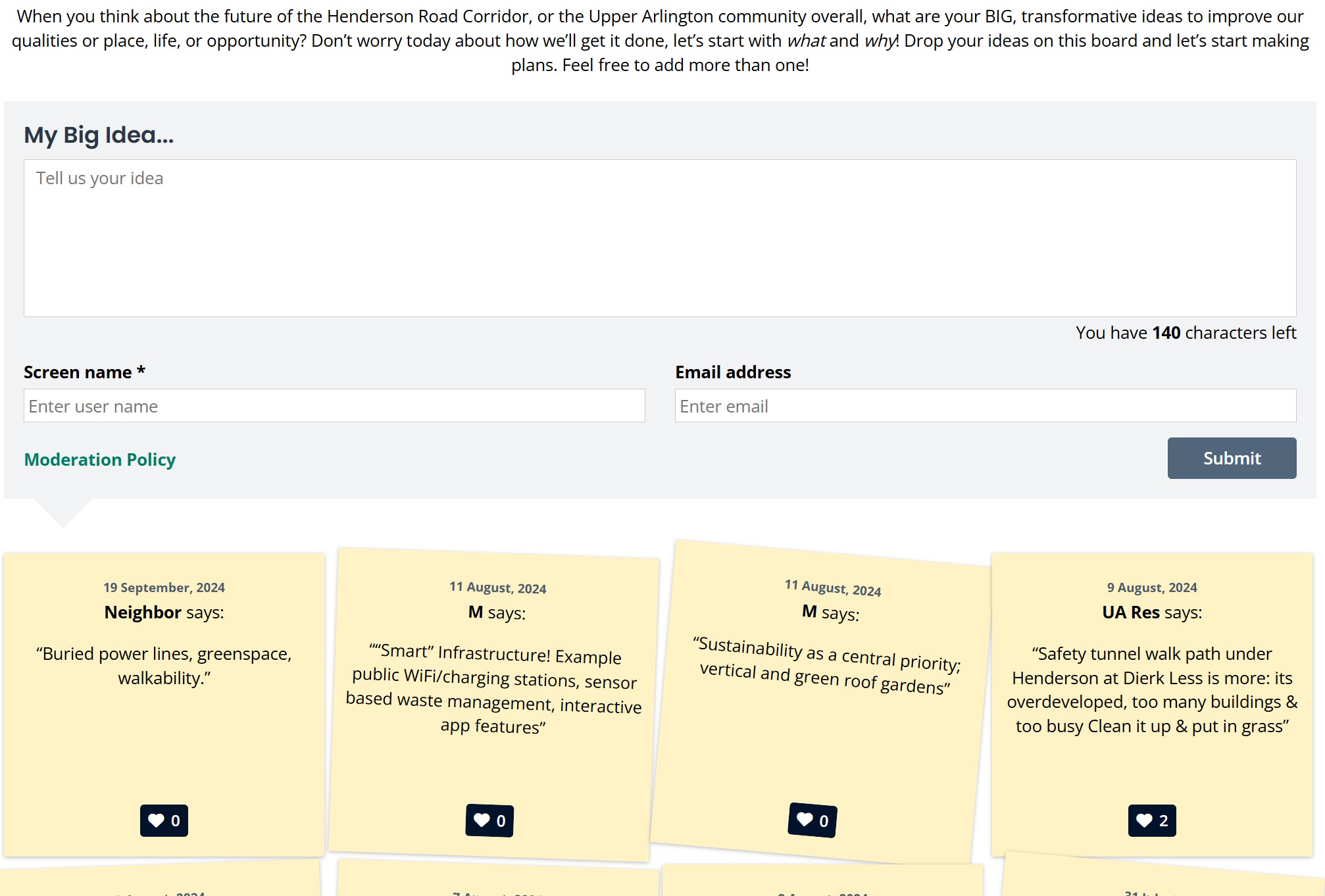
Visioner: A single prompt asks participants to leave character-limited "sticky notes" with optional like/dislike buttons.
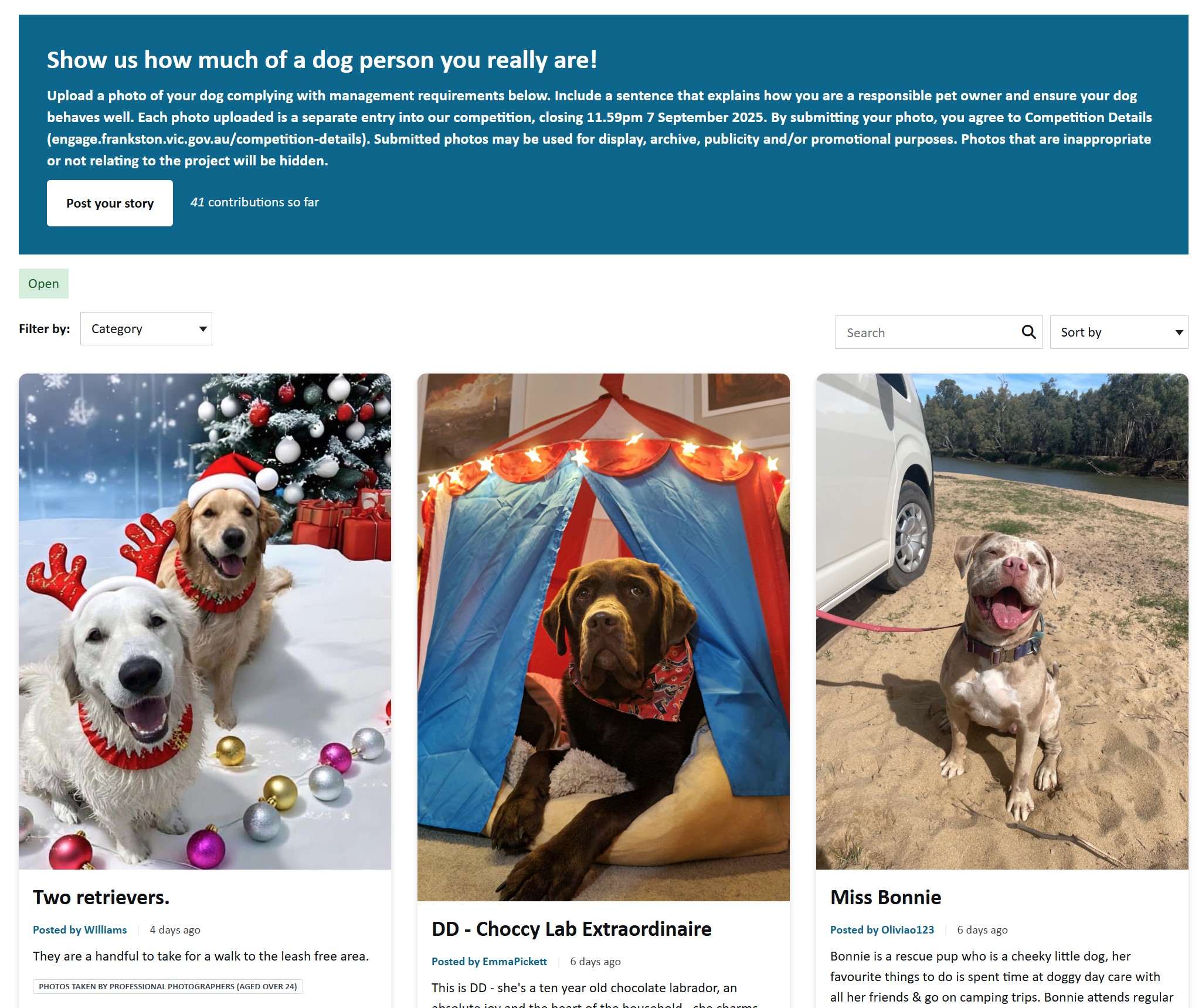
Gather: Collect text comments with pictures, videos, and long-form comments where participants can also engage with each other.
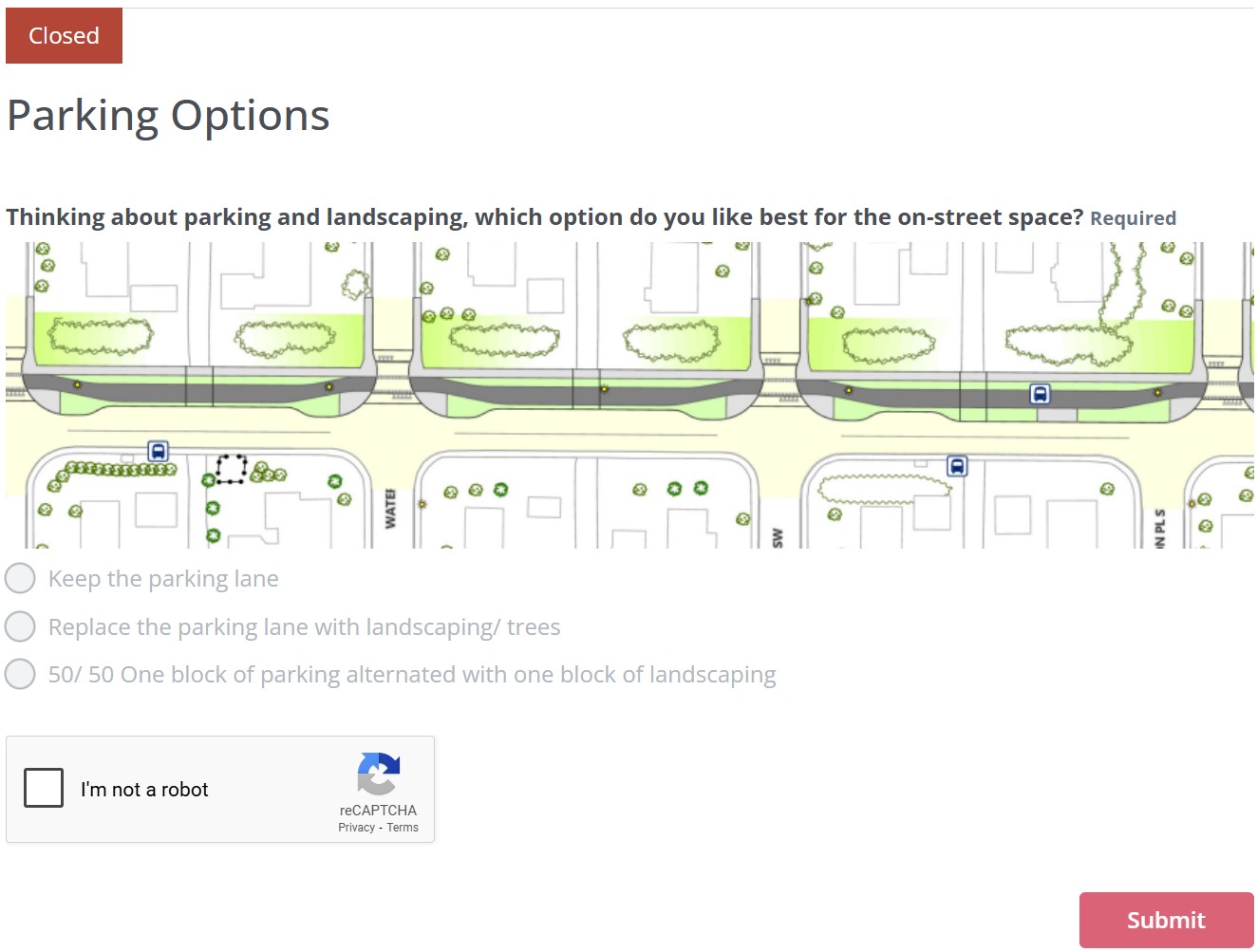
Form: Easy surveys from a variety of templates and question types that can include advanced logic and multimedia content.
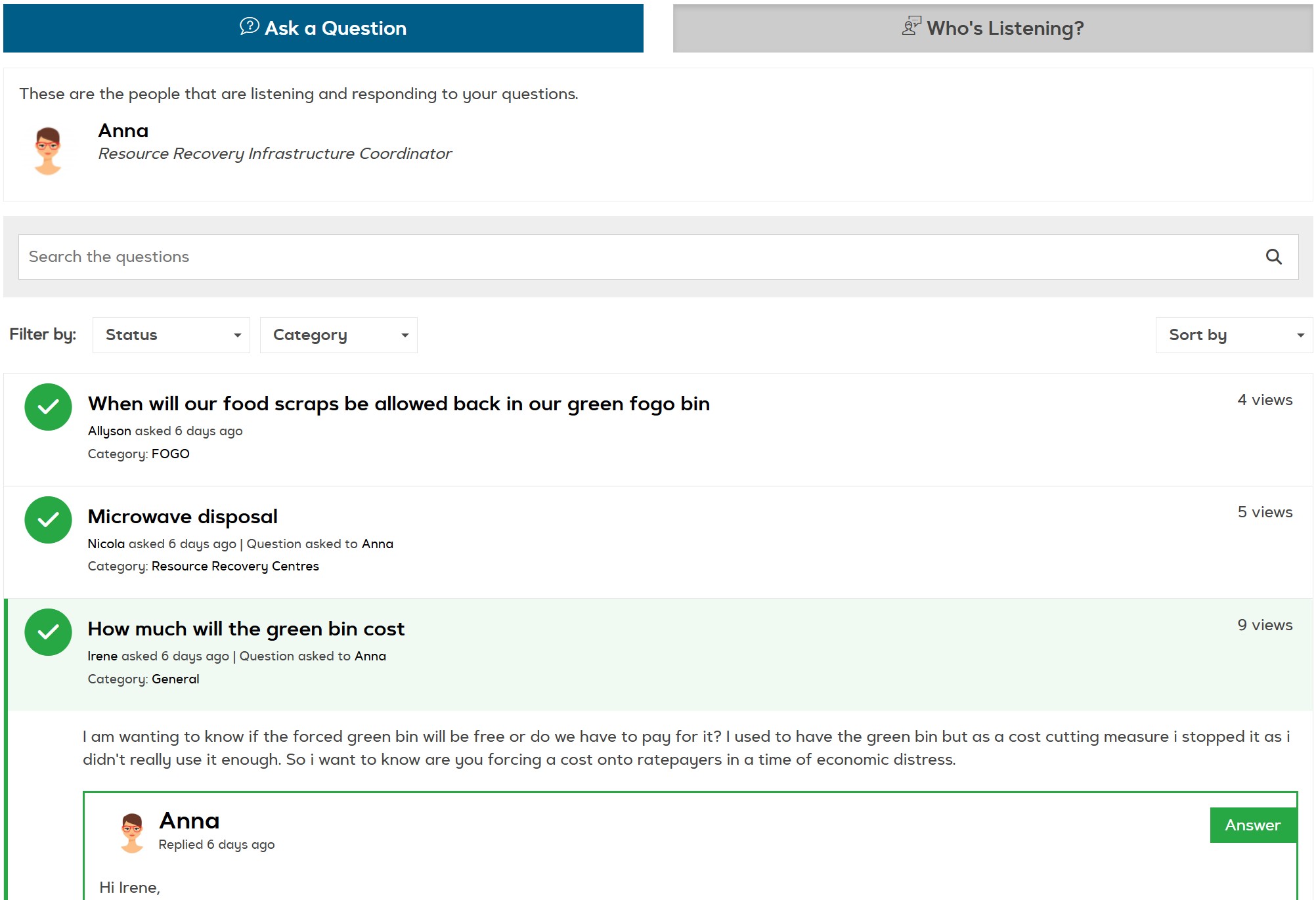
Q&A: Collect publicly-viewable questions and have a pre-determined panel of experts/leaders share responses.
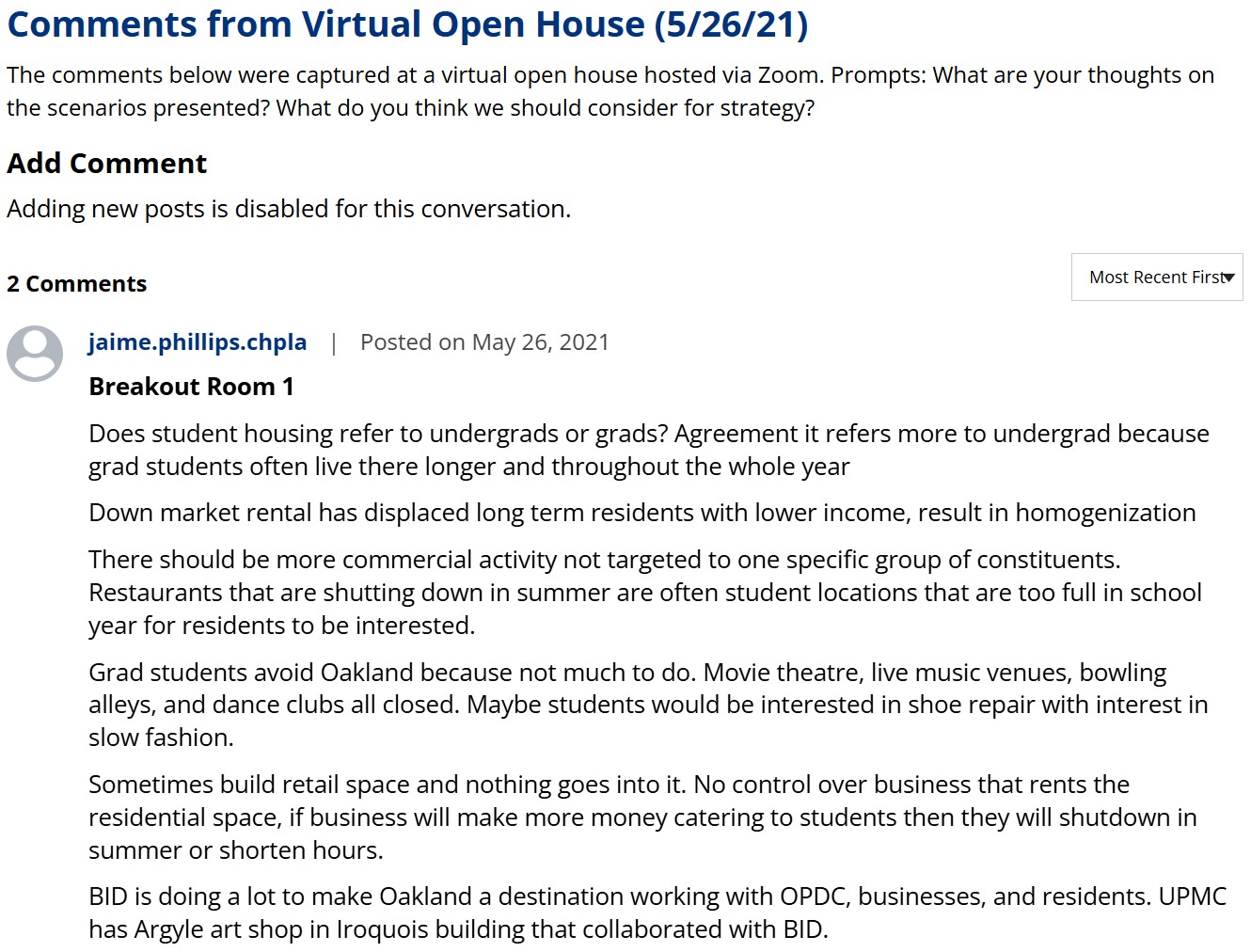
Conversation & Forum: An open comment box leaves many possibilities for varied dialogue and live note-taking.
| Pop-Out Style | Grouped by Section | Response Summary Page | Consideration and Common Uses | |
|---|---|---|---|---|
Standard | All questions are displayed at the same time, so it only requires clicking "submit" once (versus clicking through sections). Considering using for surveys less than three or four questions such as singular open comment boxes, RSVP-type forms, singular ranking question, etc. Consider the length of a survey and how much space it takes on the page. If you have the survey by itself on a subpage, standard is a great option! | |||
Paginated | X | X | When using this format, the first section will be shown in full on the page. This is great if you'll be using survey logic and future sections will depend on how they respond to questions, as it will be less obvious that it's adjusting to their answers. Consider using this if your survey has only a section or two, as it may be distracting to work through too long of a survey on a project page. If the survey is on a sub-page by itself, consider just using the standard format, since it matters less how much space it takes up. | |
Flex | X | X | X | This format keeps your page less cluttered by using a pop-out style that fills up the screen so participants can focus on the form. It can include multiple questions (by section) per "page", so it's good if you'll be grouping questions, as well as if you'd like to include content (images, concept plans, etc.) and then wanting to ask questions about them below. Also great if you're using survey logic, since the sections can be dynamic and appear depending on how they respond to questions. |
Flow | X | X | This format is one question per "page", so it's great if you plan to walk visitors through various content pieces. Considering using it if you want people to ingest information while they take the survey, such as including a video about the project before you ask questions. We wouldn't recommend using this for longer surveys, as it can get quite long to keep clicking "next" for too many singular questions. |


Types of Digital Engagement by Sophia Robison (Social Pinpoint)
We typically advise that visitors can be expected to scroll horizontally OR vertically, but ideally not both.
When deciding if you want everything (engagement activities and content) to be organized on one page or if you want to use sub-pages, think about where the URL you're sharing in communications takes them and what actions are most obvious.
Ensure that if you're using site sub-pages that there's a way for people to find the main page again--navigational bar, buttons, call to actions, however you want to do it!
Whatever the main goal is for the current phase of engagement--ingesting information, proving feedback, reviewing documents, etc. --make sure that it is the most prominent thing on the page and use other visual cues to ensure visitors don't miss the prompt.
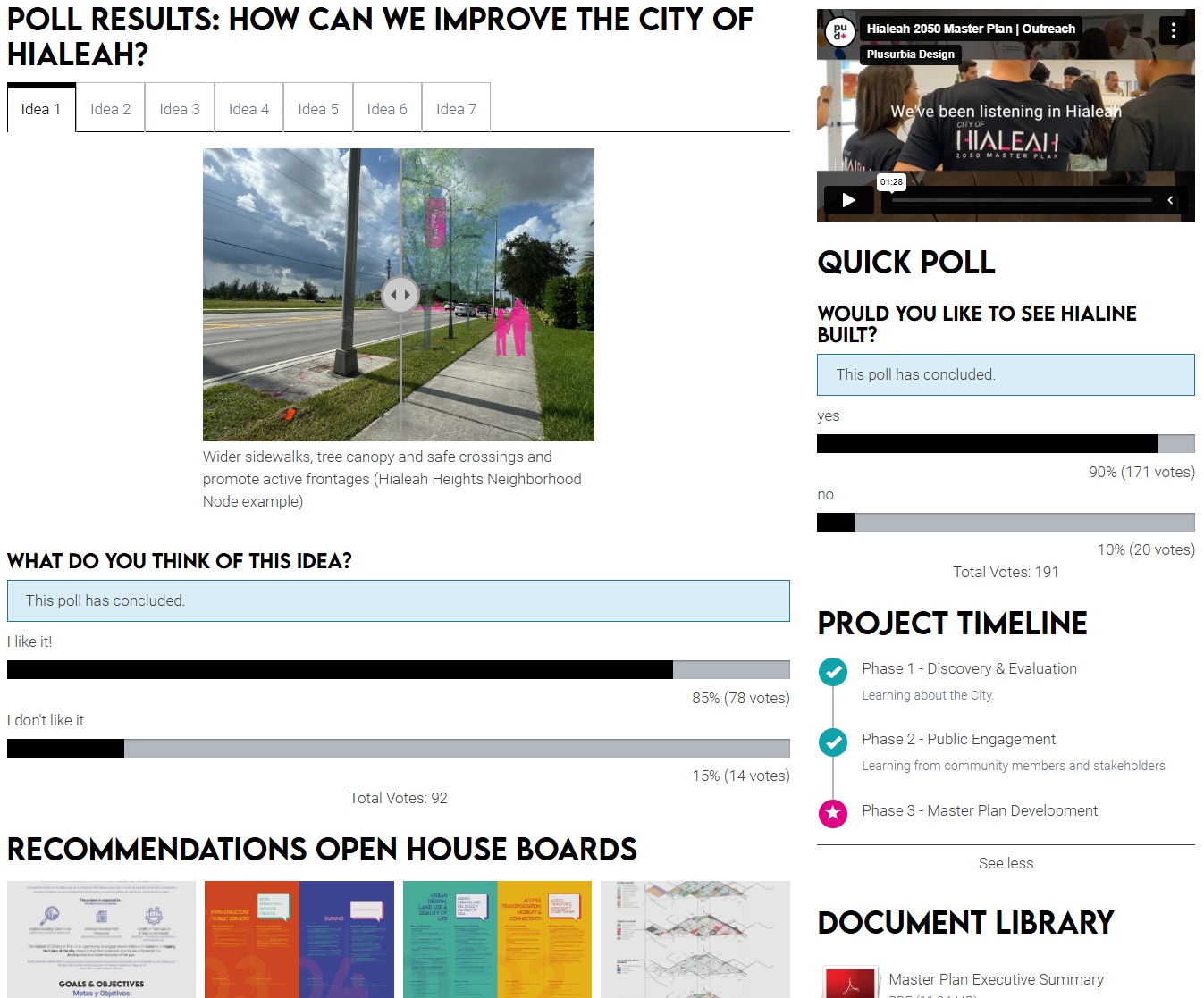
A clean page setup that preserves an archive in the bottom half of the page. A video walks you through the project, and a feature grid takes you on a journey through the intended engagement process.
The purpose and prompt is clearly stated at the top of the page, followed by accordions for a "choose your own adventure" learn more option, and a feature grid to help you explore the otherwise large "study" document. On the side, a Document Library, FAQ and Timeline provide further orientation and background.
Clear orientation and instructions make way for a series of informational videos and a gamified, step-by-step series of activities designed for children and their parents to complete together. Take note of the use of sub-pages and Call to Action tools.
This page is short and sweet -- using a Feature Grid with Anchor Points (a very cool hack!) to help visitors navigate to different items on the page. The only engagement tool, a Social Map, is placed pretty high up on the page, and followed by an Accordion tool for additional as-needed information.
Buttons indicate engagement opportunities and the Facts tool highlights key information to educate engagers. Note how each button takes you to a separate Form tool to provide feedback on different projects.